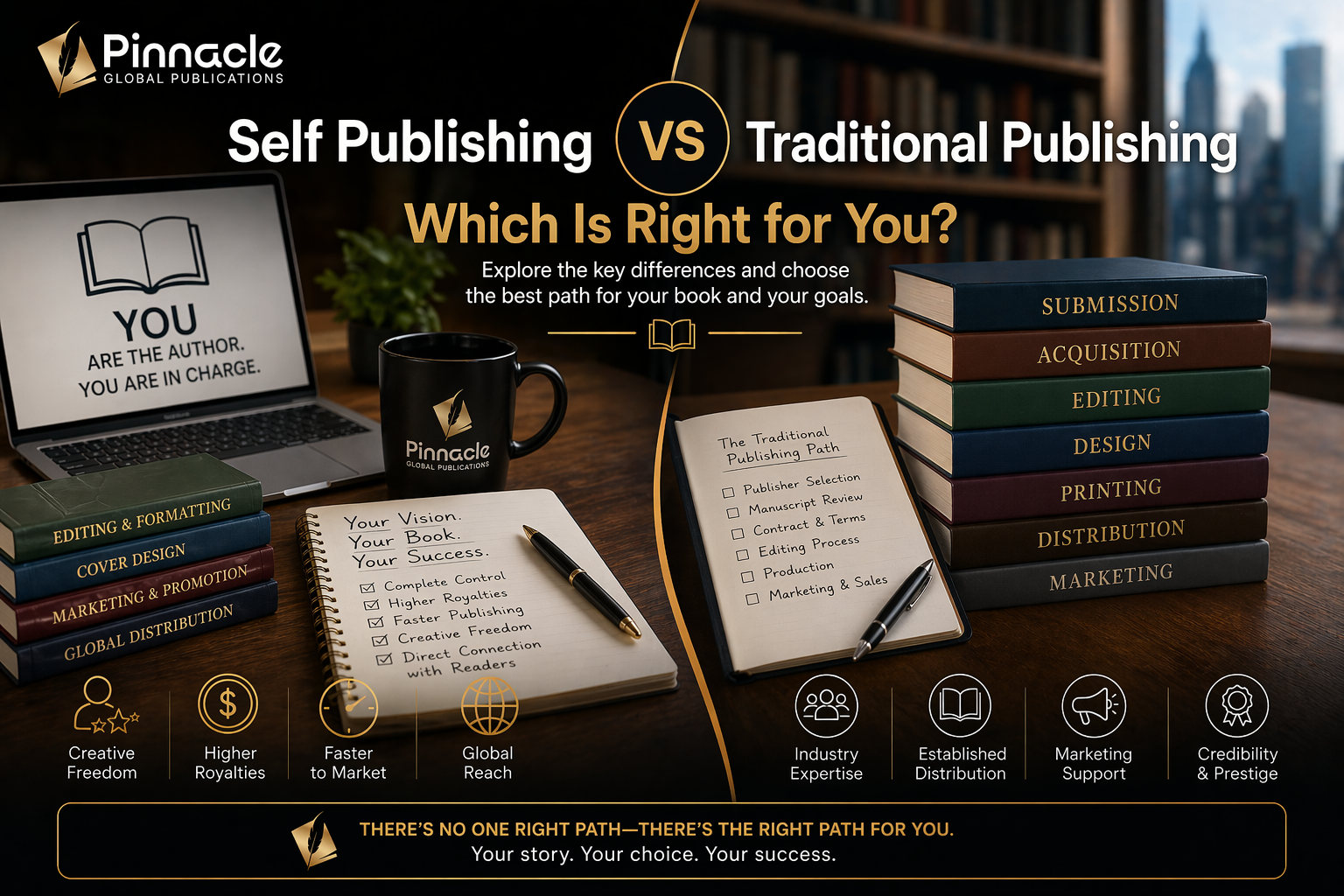
If you’ve written a book, one of the first big decisions you will face is choosing how to publish it. Many authors struggle with the question of self publishing vs traditional publishing because both options offer different advantages and challenges.
Years ago, traditional publishing was the only realistic option. Today, the publishing industry has changed dramatically. Independent publishing platforms and self publishing companies now allow authors to publish their books directly and reach readers worldwide.
But which option is right for you?
In this guide, we will explain the publishing comparison between these two paths in simple terms. By the end of this article, you will understand the self publishing vs traditional publishing pros and cons, how each system works, and which option may fit your goals as an author.
What Is Traditional Publishing?
Traditional publishing is the traditional route where a book publishing company in the United States acquires your manuscript and manages the publishing process.
In this system, the publisher typically handles:
- Editing
- Book design
- Printing
- Distribution
- Marketing support
However, authors usually need to secure a literary agent before submitting their manuscript to a publisher. The agent presents the book proposal to publishers and negotiates contracts on the author’s behalf.
If a publisher accepts your manuscript, they will offer a publishing contract outlining terms such as royalties, rights, and production timelines.
While traditional publishing offers credibility and established distribution networks, it also involves strict selection processes and long waiting periods.
What Is Self-Publishing?
Self-publishing allows authors to publish their books independently without relying on traditional publishers.
In this model, the author takes responsibility for the publishing process or works with professional service providers. Many self publishing companies offer assistance with editing, formatting, cover design, and distribution.
Independent authors typically publish their books through digital platforms that allow them to sell their books online.
The biggest difference between traditional vs independent publishing is control. With self-publishing, authors make all creative and business decisions regarding their books.
This includes:
- Pricing
- Cover design
- Publishing timeline
- Distribution platforms
- Marketing strategy
Because of this flexibility, self-publishing has become a popular option for both new and experienced writers.
The Key Differences Between Self-Publishing and Traditional Publishing
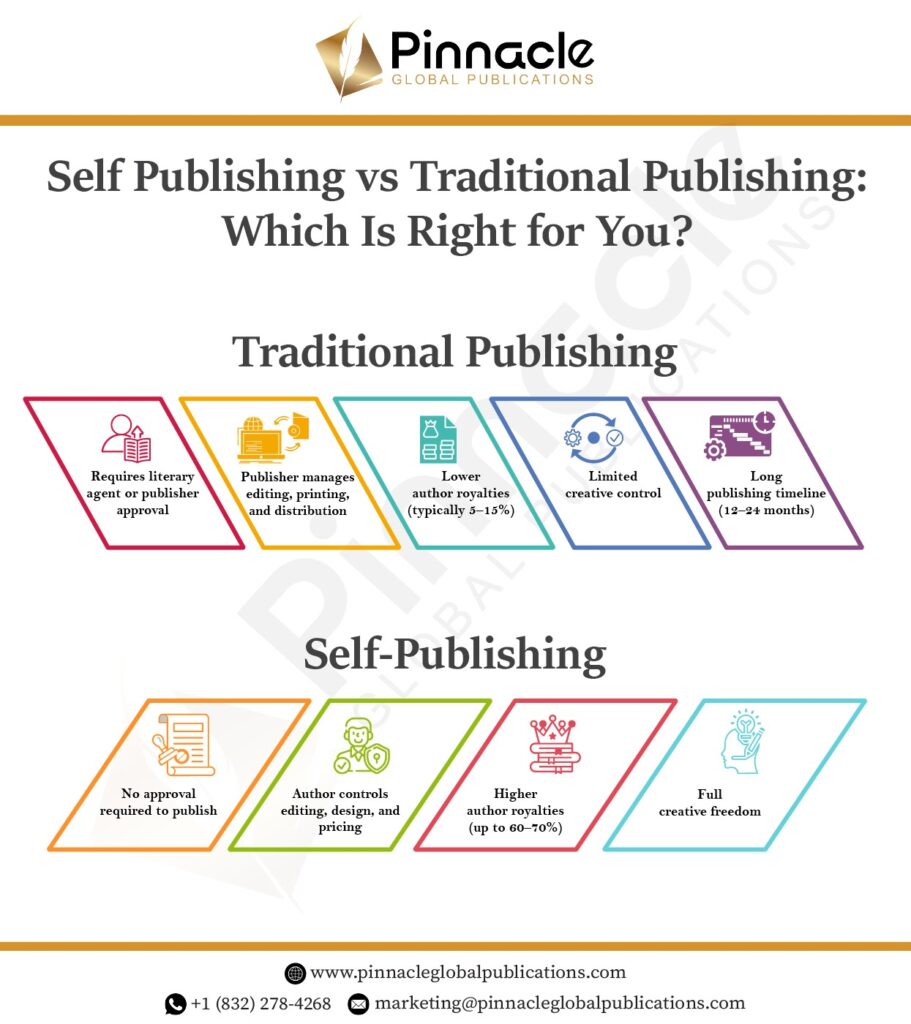
When comparing self publishing vs traditional publishing, several factors influence the author’s experience.
Ownership and Publishing Control
One of the most important differences is publishing control.
In traditional publishing, the publisher often has the final say on many decisions including cover design, pricing, and marketing strategies.
Self-publishing allows authors to maintain complete control over their work. Authors can choose how the book is presented and where it is distributed.
For writers who value creative freedom, self-publishing can be appealing.
Author Royalties
Another major difference involves author royalties, which represent the percentage of book sales an author earns.
Traditional publishers typically offer lower royalties because they invest in production and distribution.
In contrast, self-published authors often earn higher royalties per book sale. However, they are also responsible for covering publishing expenses such as editing and design.
Understanding royalty structures is an important part of any publishing comparison.
Speed of Publishing
Traditional publishing can take a long time. Authors may spend months searching for agents and waiting for responses from publishers. Even after acceptance, it can take a year or more before the book is released.
Self-publishing allows authors to publish much faster because they control the timeline.
Once editing, formatting, and design are complete, a self-published book can often be released within weeks.
Marketing Responsibilities
Marketing responsibilities also differ between the two models.
Traditional publishers sometimes support marketing efforts, but many authors still need to promote their own books.
Self-published authors handle most of their marketing independently. This may involve building an online presence, engaging with readers, and promoting their work on social media.
Regardless of the publishing method, authors who actively promote their books often see better results.
Self Publishing vs Traditional Publishing Pros and Cons
Understanding the self publishing vs traditional publishing pros and cons helps authors decide which path aligns with their goals.
Advantages of Traditional Publishing
Traditional publishing offers several benefits:
- Established credibility within the publishing industry
- Access to experienced editorial teams
- Distribution networks that include bookstores and libraries
- Reduced financial responsibility for production costs
For authors who want to work with a recognized book publishing company in the United States, traditional publishing can provide industry recognition and professional support.
Challenges of Traditional Publishing
Despite its advantages, traditional publishing also has limitations.
Some authors feel frustrated by the lengthy process of submitting manuscripts and waiting for responses. Others may find that publishers reject their work repeatedly before acceptance.
These challenges are why some authors search online for discussions about why traditional publishing is bad. While traditional publishing is not inherently bad, it may not suit every author’s goals.
Limited creative control and lower author royalties are also common concerns.
Advantages of Self-Publishing
Self-publishing provides several unique benefits.
Authors who choose independent publishing often appreciate the freedom to control every aspect of their book.
Advantages include:
- Complete creative control
- Faster publishing timelines
- Higher potential royalties
- Flexibility to update or revise the book
Many authors also enjoy the ability to experiment with different marketing strategies and publishing formats.
Challenges of Self-Publishing
Self-publishing also requires more responsibility.
Authors must manage tasks such as editing, design, and publishing setup. Without professional support, mistakes in formatting or metadata can affect a book’s visibility.
Because of these challenges, many authors work with self publishing companies that offer professional assistance.
These companies help authors prepare their books professionally while allowing them to remain independent.
Choosing the Right Publishing Path for Your Goals
Deciding between self publishing vs traditional publishing depends on what you want from your writing career.
Consider traditional publishing if you:
- Want validation from established publishers
- Prefer a publisher to manage production tasks
- Are willing to wait for acceptance and publication
Self-publishing may be the better option if you:
- Want full publishing control
- Prefer faster publishing timelines
- Want higher author royalties
- Enjoy managing your own publishing strategy
For many modern writers, traditional vs independent publishing is not always an either-or decision. Some authors publish certain books independently while pursuing traditional deals for others.
How Self-Publishing Is Changing the Industry
The publishing industry has evolved significantly in recent years. Independent authors now have access to professional tools that were once only available to large publishing houses.
Digital publishing platforms, global distribution networks, and professional service providers have made it easier than ever to publish books independently.
This shift has allowed more voices and perspectives to reach readers worldwide.
As a result, self-publishing is no longer seen as a secondary option. It has become a powerful alternative for many authors.
Work With Pinnacle Global Publications
If you are deciding between self publishing vs traditional publishing, professional guidance can help you make the best choice for your goals.
Pinnacle Global Publications works with authors who want to publish their books professionally while maintaining creative independence. As an experienced book publishing company in the United States, our team supports authors through every stage of the publishing journey.
We provide services that help authors prepare their manuscripts for publication, design professional book covers, manage formatting and publishing setup, and develop distribution strategies.
Whether you are exploring traditional vs independent publishing or planning to work with trusted self publishing companies, Pinnacle Global Publications offers the expertise needed to bring your book to life.
If you are ready to publish your book or need guidance on choosing the right publishing path, reach out to Pinnacle Global Publications today to speak with one of our publishing consultants.
Frequently Asked Questions
The main difference lies in control and responsibility. Traditional publishers manage production and distribution, while self-published authors maintain full control over the publishing process.
Self-published authors often receive higher author royalties because they retain a larger percentage of book sales.
Neither option is universally better. The right choice depends on the author’s goals, timeline, and preference for publishing control.
Many authors prefer self-publishing because it offers creative freedom, faster publishing timelines, and higher potential royalties.
Yes. Many independent authors have built successful careers through self-publishing by reaching readers through online platforms and effective marketing.
