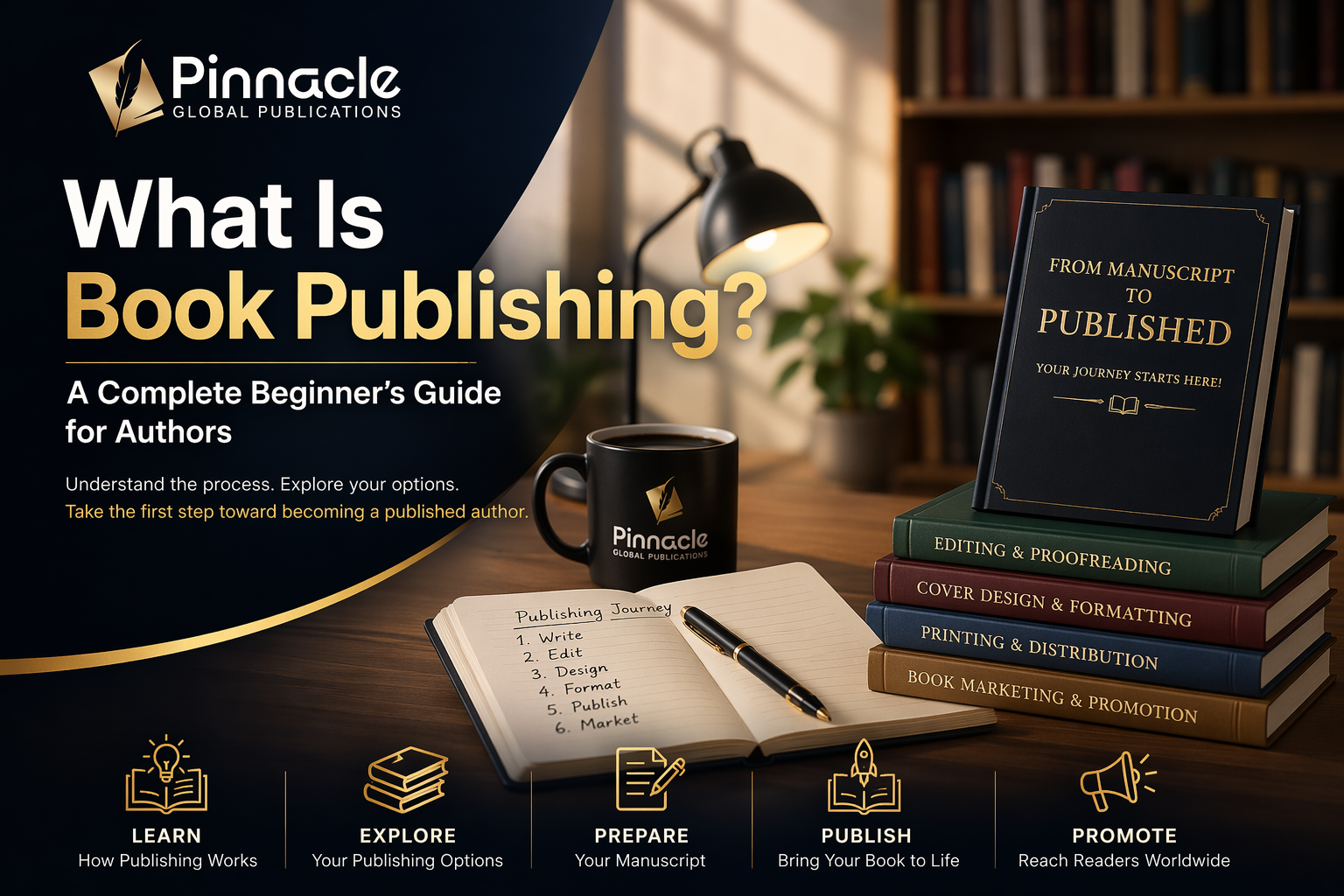
If you have written a manuscript and want to share it with the world, the next step is understanding what is book publishing and how the process works.
Many new writers feel overwhelmed because publishing involves more than simply uploading a document online. It includes editing, formatting, design, distribution, and marketing.
This book publishing guide will walk you through the essential steps authors need to understand before launching their book. Whether you are exploring traditional publishing or independent publishing options, this guide explains the publishing process from manuscript to finished book.
By the end of this guide, you will understand how manuscripts become professionally published books and what authors should expect during the journey.
What Is Book Publishing?
Book publishing is the complete journey of transforming written content into a finished book that readers can buy and access. Publishing includes several stages such as editing, proofreading, book design, formatting, printing, distribution, and promotion.
At its core, publishing is the manuscript to book conversion process. A draft manuscript is refined through professional preparation so it becomes a market-ready product. This preparation ensures the book meets industry standards and provides a professional reading experience.
Publishing can produce books in several formats including:
- Printed paperback books
- Hardcover editions
- eBooks for digital readers
- Audiobooks for listening platforms
Each format requires specific preparation steps, which is why many authors rely on professional book publishing services to manage the technical details.
Types of Book Publishing
Understanding the different publishing paths is essential for publishing for beginners. Authors typically choose between two main approaches.
Traditional Publishing
Traditional publishing involves working with an established publishing house. In this model, authors usually submit a proposal or manuscript to a literary agent or publisher. If accepted, the publishing company handles editing, design, printing, and distribution.
Major traditional publishers include large international publishing houses that distribute books globally.
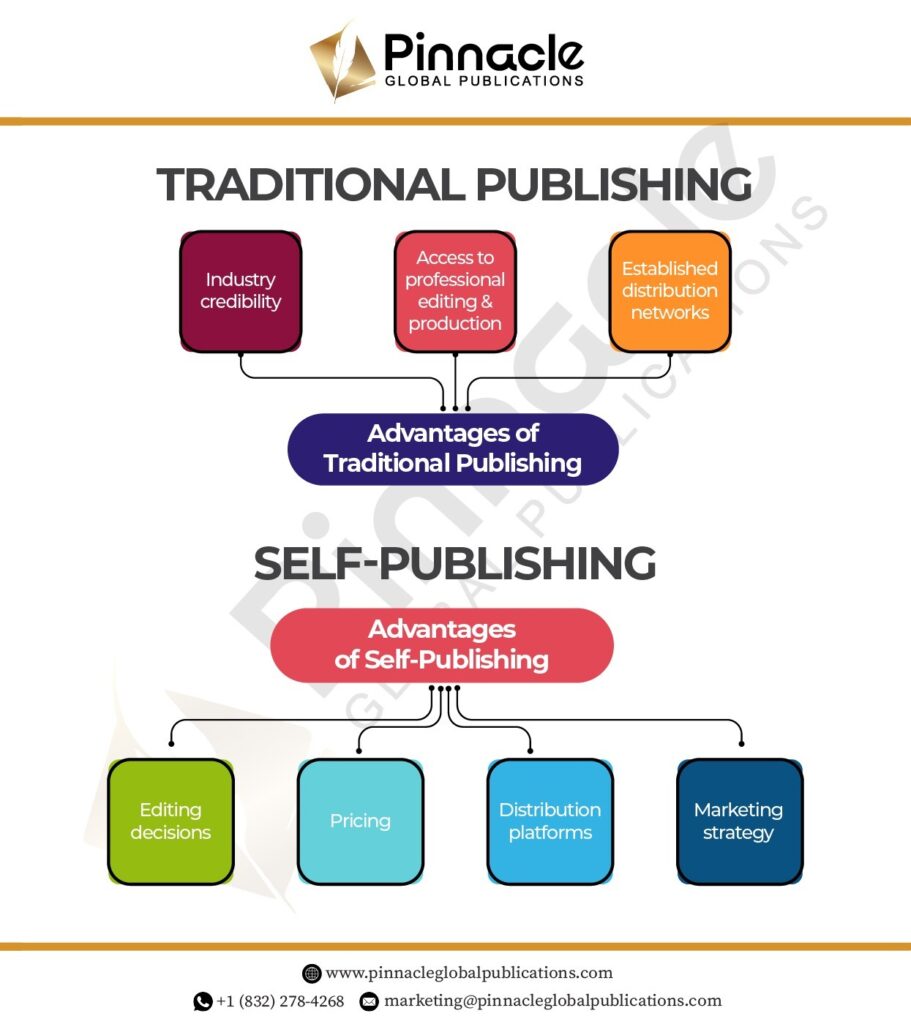
Advantages of Traditional Publishing
- Industry credibility
- Access to professional editing and production
- Established distribution networks
However, the process is highly competitive. It may take months or even years for a manuscript to be accepted, and authors often give up some creative control.
Self-Publishing
Self-publishing allows authors to publish independently without relying on a traditional publisher. With modern technology and publishing platforms, authors can release books directly to global marketplaces.
Advantages of Self-Publishing
- Cover design
- Editing decisions
- Pricing
- Distribution platforms
- Marketing strategy
Because self-publishing requires technical knowledge, many authors seek assistance from professional book publishing services that help manage the process professionally.
Platforms such as Amazon KDP and IngramSpark have made self-publishing widely accessible to authors around the world.
The Book Publishing Process Explained
For new authors, the publishing process explained step by step can make the journey much easier to understand. Below is a simplified breakdown of how manuscripts move through the publishing pipeline.
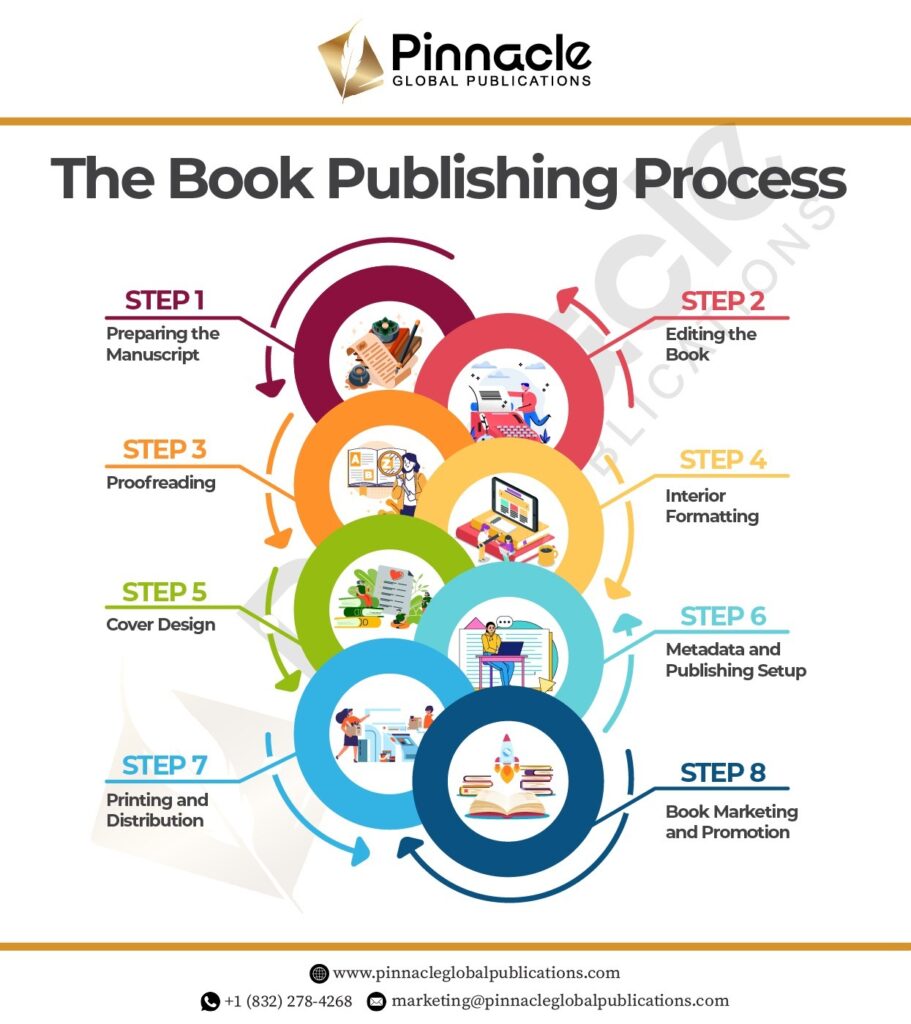
Step 1: Preparing the Manuscript
The first step is completing the manuscript. Authors begin with a draft and refine it through revisions until the content is clear and structured.
During this stage authors focus on:
- Completing all chapters
- Refining the book’s message
- Organizing content logically
- Identifying the target audience
Many nonfiction authors base their books on professional experience, research, or academic work.
Step 2: Editing the Book
Editing is a critical stage that improves the quality of the manuscript. Professional editing helps refine the structure, clarity, and language of the book.
Common types of editing include:
Developmental Editing
This stage focuses on the overall structure and content of the book. Editors evaluate themes, organization, and narrative flow.
Line Editing
Line editing improves sentence clarity, tone, and writing style.
Copyediting
Copyediting focuses on grammar, spelling, punctuation, and consistency.
Professional editing ensures the manuscript is polished before moving to production.
Step 3: Proofreading
Proofreading is the final quality check before publication. It identifies small errors that may remain after editing.
Proofreaders review the final manuscript for:
- Typographical errors
- Grammar issues
- Inconsistent formatting
- Minor language corrections
This stage ensures the book appears clean and professional.
Step 4: Interior Formatting
Interior formatting, also known as typesetting, prepares the book for reading. Formatting includes:
- Page layout
- Margins and spacing
- Font selection
- Chapter headings
- Table of contents
Professional formatting ensures readability and improves the reader’s experience.
Step 5: Cover Design
A book cover plays a major role in attracting readers. A professionally designed cover includes:
- Front cover design
- Spine layout
- Back cover description
- Barcode placement
Since readers often judge books by their cover, investing in professional design can significantly influence sales.
Step 6: Metadata and Publishing Setup
Before publishing, authors must prepare metadata for their book. Metadata is the information used by retailers and libraries to categorize and display books.
Important metadata elements include:
- Book title and subtitle
- Author name
- Book description
- Keywords
- Categories
- ISBN number
Metadata directly affects how easily readers can find a book online.
Step 7: Printing and Distribution
After preparation, the book is ready for publishing and distribution.
Distribution determines where readers can purchase the book. Options may include:
- Online retailers such as Amazon
- Bookstores and libraries
- Global distribution networks
- Print-on-demand services
Print-on-demand technology allows books to be printed only when ordered, reducing upfront costs for authors.
Step 8: Book Marketing and Promotion
Publishing a book is only the beginning. Marketing helps readers discover your work.
Successful marketing strategies include:
- Building an author website
- Promoting books on social media
- Sending advance copies to reviewers
- Hosting book launch events
- Participating in interviews and podcasts
Authors who plan marketing early often see better results after publication.
Why Professional Book Publishing Services Matter
For many authors, going through the entire publishing process alone can be challenging. Technical requirements, formatting standards, and distribution logistics require careful planning.
This is why many writers work with professional book publishing services that offer guidance from manuscript preparation to distribution.
Professional support can help ensure:
- The book meets industry standards
- Publishing platforms are configured correctly
- The book is prepared for marketing and distribution
This support is especially valuable for publishing for beginners who want to avoid common mistakes.
Work With Pinnacle Global Publications
If you are ready to turn your manuscript into a professionally published book, Pinnacle Global Publications provides the expertise and support authors need.
Our team specializes in professional book publishing services designed to guide writers through every stage of the publishing journey. From editing and formatting to cover design, distribution, and marketing preparation, we help simplify the manuscript to book conversion process.
Whether you are a first-time author or an experienced writer preparing your next release, our publishing consultants work closely with you to ensure your book is prepared professionally and reaches the right audience.
If you are looking for guidance on how to publish your book successfully, contact Pinnacle Global Publications today to schedule a consultation and begin your publishing journey with confidence.
Frequently Asked Questions
What is book publishing in simple terms?
Book publishing is the process of turning a written manuscript into a finished book that can be distributed and sold to readers in print or digital formats.
What are the main types of book publishing?
The two main types of publishing are traditional publishing and self-publishing. Traditional publishing involves working with a publishing company, while self-publishing allows authors to publish independently.
How long does the publishing process take?
The publishing timeline can vary depending on editing, production, and marketing preparation. In many cases, the process can take several weeks to several months.
Do I need professional help to publish a book?
While authors can publish independently, many choose professional book publishing services to ensure their book meets industry standards and is properly prepared for distribution.
What is manuscript to book conversion?
Manuscript to book conversion refers to the process of transforming a written manuscript into a professionally formatted and designed book ready for publishing.
Can first-time authors publish successfully?
Yes. With proper guidance and preparation, first-time authors can successfully publish their books and reach readers around the world.
