“Hybrid publishing” gets used loosely enough that it’s worth defining carefully before deciding if it’s right for you — the term covers everything from genuinely author-centered publishing partnerships to vanity presses that borrowed the label to sound more legitimate. Understanding what hybrid publishing actually is, and how to tell a real one from an imitation, matters more than the label itself.
What Hybrid Publishing Actually Means
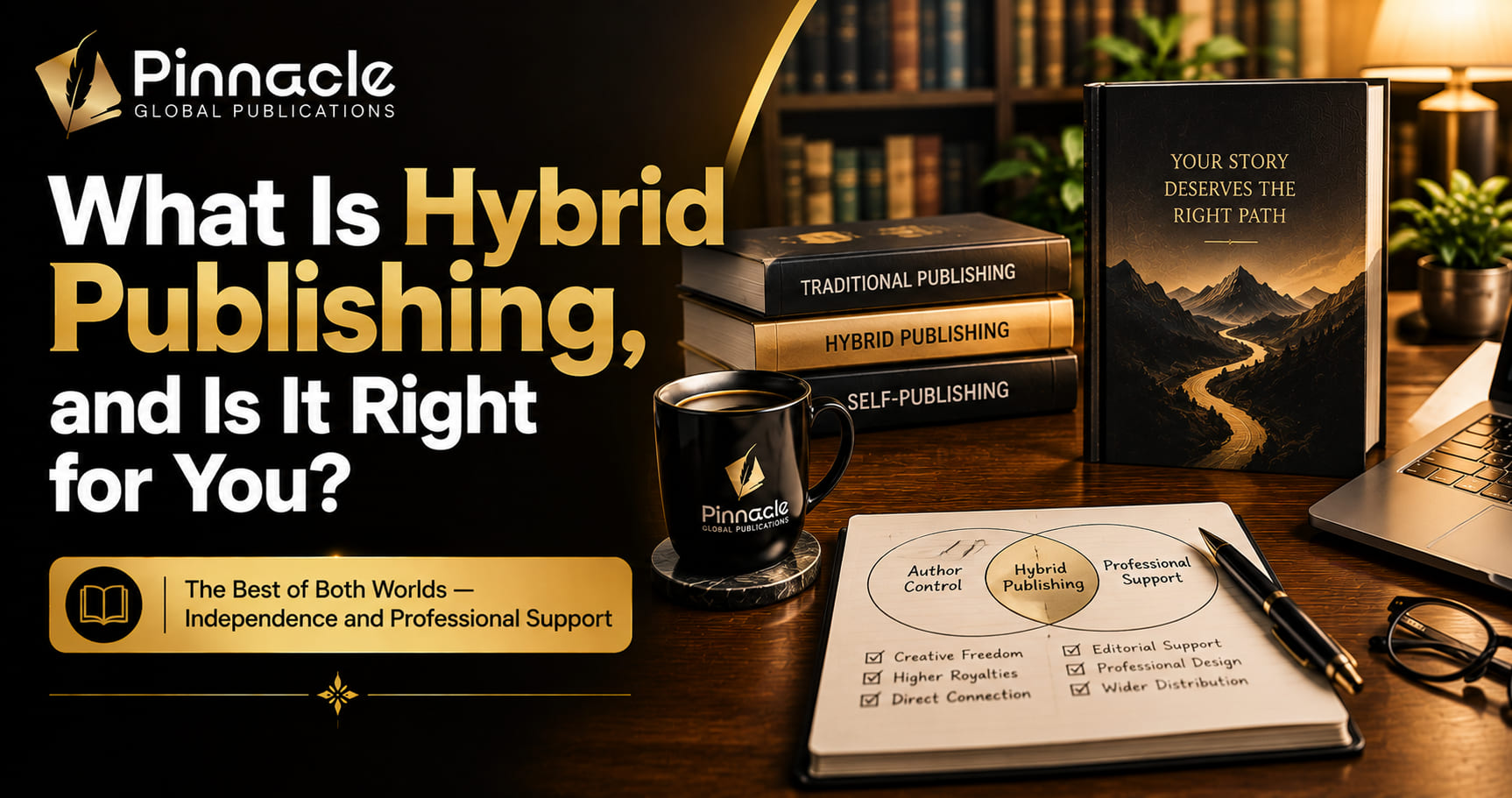
Hybrid publishing sits between traditional publishing and self-publishing. Like traditional publishing, a hybrid publisher provides professional editing, design, and production services and publishes under their own imprint. Like self-publishing, the author typically pays some or all of the production costs upfront and usually retains a much higher royalty percentage than a traditional deal offers — often 50% or more, compared to traditional publishing’s typical 5-15%.
The defining trait of a legitimate hybrid publisher is selectivity: they evaluate manuscripts and decline ones that don’t meet their quality bar, the same way a traditional publisher would, rather than accepting anyone willing to pay. That selectivity is exactly what separates a real hybrid publisher from a vanity press using the term as a marketing label.
How Hybrid Differs From Traditional Publishing
- Cost: Traditional publishing costs the author nothing upfront and typically includes an advance. Hybrid publishing requires the author to pay some or all production costs.
- Royalties: Traditional publishing pays 5-15% typically. Hybrid publishing pays substantially more, often 50% or higher, since the author has covered production costs the publisher would otherwise absorb.
- Selectivity: Both traditional and legitimate hybrid publishers are selective — they turn down manuscripts that don’t meet their standards, unlike a vanity press that accepts nearly everyone who pays.
- Speed: Traditional publishing timelines often run 18-24 months from acquisition to release; hybrid publishing is typically faster, closer to self-publishing timelines.
How Hybrid Differs From Self-Publishing
- Selectivity: Self-publishing has no gatekeeping at all — anyone can publish anything. A legitimate hybrid publisher evaluates and can decline your manuscript.
- Services included: Self-publishing means assembling your own team of editors, designers, and formatters (or doing it yourself). Hybrid publishing packages these services together under one publisher.
- Imprint and credibility: A hybrid publisher’s imprint appears as the publisher of record, which can carry credibility with certain reviewers, bookstores, and award committees that self-published books sometimes struggle to access.
- Cost structure: Self-publishing costs can be spread out and controlled entirely by the author, hiring only what’s needed. Hybrid publishing is typically a more structured, bundled cost.
How to Spot a Legitimate Hybrid Publisher
The Independent Book Publishers Association (IBPA) maintains criteria for legitimate hybrid publishers, and checking a prospective publisher against these is worth doing before signing anything:
- They vet submissions and reject manuscripts that don’t meet editorial standards — if literally everyone who applies gets accepted, that’s a vanity press regardless of what they call themselves.
- They provide professional editorial, design, and production quality comparable to traditional publishing.
- They publish under a clearly identified imprint, not simply printing whatever the author submits under the author’s own name with no editorial involvement.
- They pursue legitimate distribution to retailers and libraries, not just a print-on-demand listing on one platform.
- Their contract terms, costs, and royalty structure are transparent and clearly disclosed before you pay anything.
A publisher that accepts every submission, provides no real editorial pushback, and is vague about costs until you’re already committed is very likely a vanity press using “hybrid” as a more palatable label.
Questions to Ask a Prospective Hybrid Publisher
- What percentage of submissions do you accept? A publisher that can’t or won’t answer this, or whose answer is close to 100%, isn’t practicing real selectivity.
- What exactly is included in the cost, and what costs extra? Get a full breakdown — editing rounds, design, formatting, distribution setup, marketing — rather than a single bundled number with unclear scope.
- Who owns the rights to my book? Legitimate hybrid publishers typically leave rights with the author, or clearly define a limited license — this should never be vague or buried in fine print.
- What distribution do you actually provide? Ask specifically whether that means real retailer and library distribution, or just a print-on-demand listing on one platform.
- Can I see sales results from recent titles you’ve published? A publisher confident in their track record will share this; reluctance is a warning sign.
- What happens if I want to leave or the book underperforms? Understand the exit terms and any ongoing obligations before signing, not after.
A Realistic Walkthrough
Consider an author with a solid, well-written manuscript who submitted to a dozen literary agents without success — not because the book is bad, but because traditional publishing’s acquisition process is narrow and slow, and plenty of genuinely good books don’t land a deal for reasons unrelated to quality. A legitimate hybrid publisher reviews the manuscript, provides real editorial feedback, and agrees to publish it after the author addresses a developmental note or two. The author pays for the production package, retains creative control over the final product, and ends up with a professionally produced book, real distribution, and a royalty rate several times higher than a traditional deal would have paid — in exchange for the upfront investment traditional publishing wouldn’t have required.
Compare that to a vanity press scenario: the same manuscript submitted with no real editorial review, accepted immediately regardless of quality, produced with minimal design effort, and “distributed” only through a single print-on-demand listing nobody would ever discover without direct promotion. Same manuscript, same word “hybrid” sometimes used by both, radically different outcome — which is exactly why vetting matters more than the label.
What Hybrid Publishing Typically Costs
Costs vary enormously depending on scope, but a full hybrid publishing package covering editing, design, formatting, and production commonly runs anywhere from $5,000 to $25,000 or more, depending on the publisher’s reputation, the book’s length and complexity, and how much marketing support is bundled in. This is a significant sum, which is exactly why vetting a publisher’s legitimacy and track record matters so much before committing — this isn’t a decision to make on a compelling sales pitch alone.
Who Hybrid Publishing Tends to Suit
Hybrid publishing tends to work well for authors who want professional quality and support without navigating self-publishing’s full DIY logistics, who have the budget to invest upfront, and who value keeping creative control and a significantly higher royalty share than traditional publishing offers. It’s often a strong fit for authors who were close to landing a traditional deal but not quite there, or who specifically don’t want to wait through traditional publishing’s long submission and production timeline.
Who It’s Probably Not Right For
Authors without the budget for a meaningful upfront investment, authors who want maximum control over every production decision (self-publishing suits that better), and authors specifically pursuing traditional publishing’s advance and the prestige associated with certain major imprints are generally not the right fit for hybrid publishing. It’s also not the right move for anyone drawn purely by a publisher’s confident sales pitch without checking their actual selectivity and track record first.
Frequently Asked Questions
What is hybrid publishing, in simple terms? A publishing model between traditional and self-publishing, where the author typically pays production costs but keeps a much higher royalty share, and a legitimate hybrid publisher is still selective about which manuscripts it accepts.
How is hybrid publishing different from a vanity press? Selectivity. A legitimate hybrid publisher rejects manuscripts that don’t meet its standards; a vanity press accepts virtually anyone willing to pay, regardless of quality.
How much does hybrid publishing cost? Commonly $5,000-$25,000 or more, depending on scope, the publisher’s reputation, and how much marketing support is included.
Do hybrid publishers pay advances? Rarely — the author typically covers production costs upfront instead, in exchange for a much higher royalty percentage than traditional publishing pays.
How do I know if a hybrid publisher is legitimate? Check whether they reject submissions, provide genuinely professional editorial and design quality, pursue real distribution, and are transparent about costs before you pay anything — the IBPA’s hybrid publisher criteria is a useful reference point.
Can I negotiate hybrid publishing terms? Sometimes, particularly around what’s included in the package or the royalty split, though terms tend to be more standardized than traditional publishing contracts, which are typically negotiated individually, often with an agent’s help.
Is hybrid publishing a good fit for a first book? It can be, particularly for an author with the budget and a manuscript that’s already strong but hasn’t landed traditional representation — but it’s worth exploring both self-publishing and traditional submission first, since hybrid is a real financial commitment worth making deliberately rather than by default.
Deciding If Hybrid Publishing Fits Your Book
Hybrid publishing can be a genuinely strong middle path for the right author and the right budget — but only with a legitimately selective, transparent publisher, not one using the label to dress up what’s really a vanity press. If you’re weighing hybrid publishing against traditional or self-publishing, our publishing team can walk through what each path would realistically look like for your specific manuscript. Reach out for a direct, honest assessment before you commit to any path.