Writing the book is one job. Getting readers to find it is a completely different one, and it’s the job most first-time authors are least prepared for. Book marketing for beginners doesn’t have to mean hiring a publicist or spending thousands of dollars — it means understanding a handful of fundamentals and doing them consistently, starting well before your launch date.
Marketing Starts Before the Book Is Finished
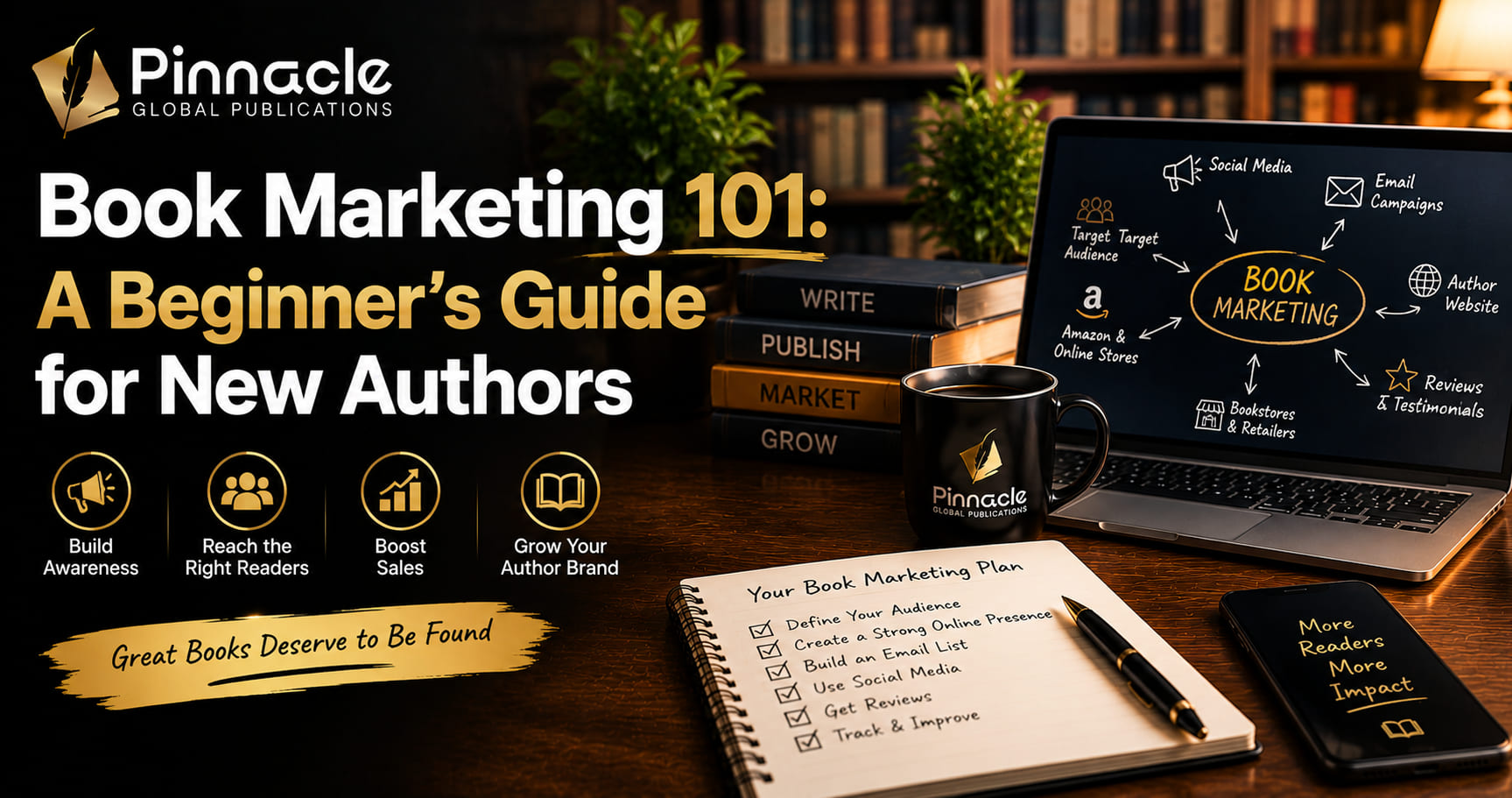
The biggest mistake new authors make is treating marketing as something that starts after publication. In reality, the groundwork — building an email list, establishing a presence where your readers already spend time, and generating early interest — works far better started months before launch than scrambled together the week the book goes live. A launch with zero existing audience awareness almost always underperforms one with even a small, engaged group of people already anticipating it.
The Fundamentals Every Author Needs
- An author website. A central hub you control, unlike a social media profile that operates under someone else’s rules and algorithm — the foundation everything else points back to.
- An email list. The single most reliable, algorithm-independent way to reach readers directly. Starting a list months before launch, even a small one, gives you a guaranteed audience for launch day.
- A clear, consistent author bio and book description. Used everywhere — website, social profiles, retailer listings — so readers encounter a consistent picture of who you are and what the book offers.
- At least one social media platform where your specific readers actually spend time, used consistently rather than every platform used sporadically.
Building an Email List From Nothing
Start with a simple sign-up incentive — a free short story, a sample chapter, a useful resource related to your book’s topic — offered on your website in exchange for an email address. Promote that sign-up wherever you’re already showing up: social media bio links, guest content, any existing network. Growth is typically slow at first; the goal isn’t a huge list immediately, it’s a list that exists and grows steadily, since even a few hundred genuinely engaged subscribers meaningfully outperform a much larger, disengaged following on launch day.
Choosing the Right Social Platform
Rather than spreading thin across every platform, pick the one where your specific readers already gather. Visual, aesthetic-driven genres (romance, YA, illustrated nonfiction) often do well on Instagram and TikTok. Professional and business nonfiction audiences frequently respond better to LinkedIn. Niche fandoms and genre fiction communities sometimes cluster on specific platforms like Reddit or Discord. One platform used consistently and authentically beats five platforms updated sporadically.
What to Do in the Months Before Launch
- Start or grow your email list, sharing behind-the-scenes progress to build anticipation.
- Reach out to relevant book bloggers, reviewers, and podcasters in your genre for early reviews or interviews timed around launch.
- Set up pre-orders where your platform supports them — pre-order momentum can meaningfully affect a book’s initial visibility on release day.
- Build simple promotional assets (a trailer, quote graphics, a clear one-line pitch) you’ll reuse throughout the launch period.
What to Do During Launch Week
- Announce to your email list and social following with a clear, direct call to action — buy, review, or share.
- Ask your existing network (friends, colleagues, early readers) to post reviews in the first few days, since early reviews affect how retailer algorithms surface the book to new readers.
- Consider a short-term promotional price or a limited bonus to create urgency around the specific launch window.
- Engage genuinely with anyone talking about your book online — thank reviewers, answer questions, show up as a real person behind the book.
What to Do After Launch (This Is Where Most Authors Stop, and Shouldn’t)
Marketing doesn’t end at launch week — it’s where many first-time authors mistakenly stop, right as momentum should be building instead. Continued visibility comes from ongoing content (blog posts, social presence, newsletter updates), pursuing additional reviews steadily rather than only in the first week, considering paid advertising once you understand what messaging resonates, and looking for speaking opportunities, podcast interviews, or community events relevant to your book’s topic. A book’s sales life is typically much longer than its launch week, and consistent post-launch effort is what sustains it.
A Sample 90-Day Marketing Timeline
- 90-60 days before launch: Finalize your author website and email sign-up incentive. Begin sharing behind-the-scenes content about the book’s progress on your chosen platform. Start reaching out to reviewers and bloggers in your genre with enough lead time for them to read before launch.
- 60-30 days before launch: Open pre-orders if your platform supports them. Ramp up email content — cover reveal, excerpt, the story behind the book. Confirm any launch-week reviews or interviews scheduled around release.
- 30 days to launch day: Build anticipation with a countdown, finalize promotional graphics and any trailer content, and prepare your launch-day announcement across every channel simultaneously.
- Launch week: Announce across all channels, activate any promotional pricing, ask your network directly for reviews, and engage actively with anyone discussing the book online.
- 30-90 days after launch: Shift to sustained content, pursue additional reviews and press opportunities, evaluate what launch efforts actually drove sales, and begin planning paid advertising if the budget and data support it.
This timeline compresses or expands depending on your specific book and resources, but the underlying principle holds regardless of scale: marketing effort spread out over months consistently outperforms the same total effort crammed into a single launch week.
Measuring What’s Actually Working
Track a small set of concrete numbers rather than relying on gut feeling: email list growth rate, social engagement on posts specifically about the book (not just follower count), and — most importantly — where actual sales are coming from. Many retailers and platforms provide at least basic source attribution, and pairing that with UTM-tagged links on anything you post lets you see which specific efforts (a particular newsletter, a specific social post, a reviewer’s mention) are actually converting into sales versus which just generate likes without moving the needle. Early in a launch, this data is what should guide where you invest more effort for the next book, rather than repeating whatever felt productive without evidence it actually worked.
Common Beginner Mistakes to Avoid
- Starting marketing the week of launch instead of months before, missing the compounding value of early audience-building.
- Spreading effort across too many platforms instead of doing one or two consistently and well.
- Only asking for sales, never providing value — readers respond better to genuine content and connection than to constant “buy my book” messaging.
- Stopping all marketing effort after launch week, missing the much longer tail of a book’s actual sales life.
- Ignoring the email list in favor of social media alone, despite email consistently outperforming social reach due to algorithm dependency on the latter.
Frequently Asked Questions
When should I start marketing my book? Ideally several months before launch — building an email list and initial audience awareness works far better than starting the week of release.
What’s the single most important book marketing tool for beginners? An email list. It’s the most reliable, algorithm-independent way to reach readers directly, and it compounds in value the earlier you start building it.
Do I need to be on every social media platform? No — one platform used consistently, where your specific readers actually spend time, outperforms scattered, inconsistent presence across many.
How much does book marketing cost for a beginner? It can start close to free — building an email list, organic social presence, and outreach to reviewers cost time more than money. Paid advertising and professional PR support are optional additions once you understand what’s resonating.
What’s the biggest book marketing mistake new authors make? Starting too late — treating marketing as something that begins after the book is finished, rather than building audience awareness in the months leading up to launch.
Should I hire a publicist as a first-time author? Not necessarily right away — many of the highest-value early efforts (email list building, reviewer outreach, social presence) are things an author can do directly. A publicist becomes more valuable once you have a clear budget and specific goals a professional can meaningfully accelerate.
How do I get my first reviews? Ask your existing network directly, reach out to genre-relevant book bloggers and reviewers with advance copies, and consider services that connect authors with reader reviewers — but always follow each platform’s actual review policies to avoid violations that can get reviews removed.
Getting Marketing Support for Your Book
Book marketing for beginners comes down to consistent fundamentals started early, not a single clever trick. If you’d like structured support building your marketing plan, our book marketing team can help you build the email list, launch plan, and ongoing strategy that gives your book a real chance at sustained visibility. Reach out to talk through a marketing plan built around your specific book and timeline.